 Image 1 of 2
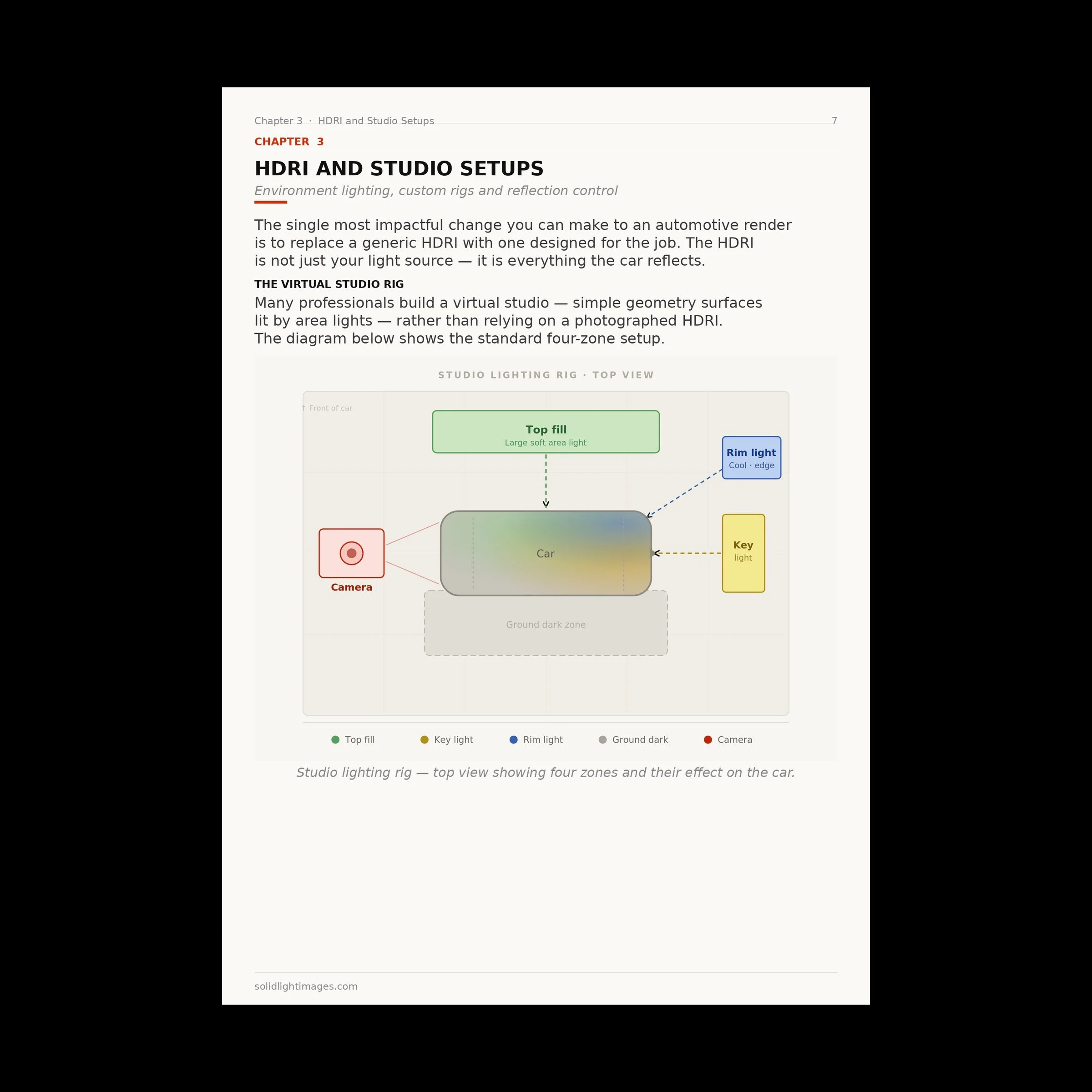 Image 2 of 2
Cars are almost entirely made of mirror. That single fact makes
automotive CGI one of the most technically demanding disciplines
in the field — and one that requires a fundamentally different
approach to lighting than any other subject.
This guide teaches you how professional automotive lighters think.
Not which buttons to press, but why the light goes where it does,
what the car reflects, and why that reflection is the most important
decision in the entire render.
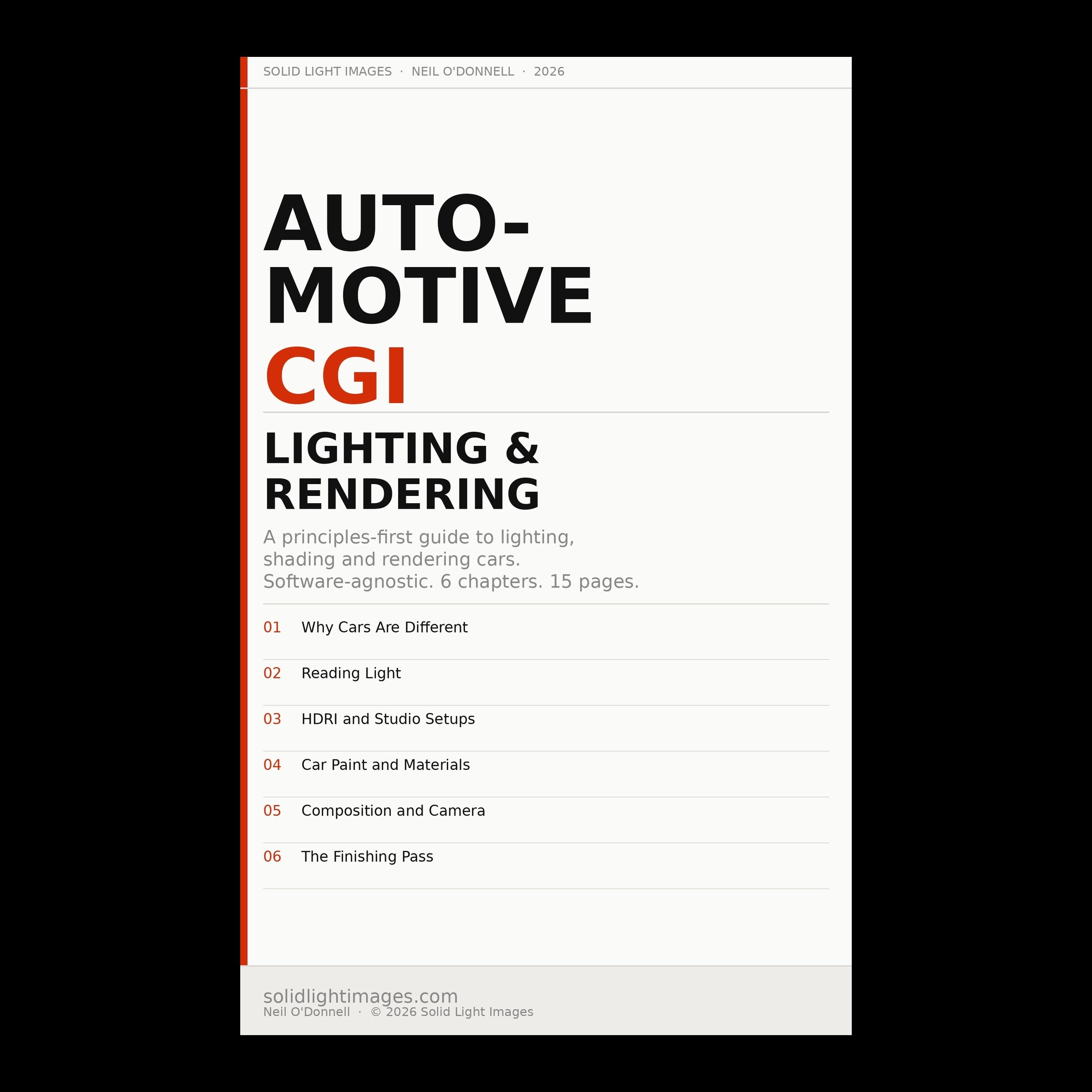
Six focused chapters cover the complete process from first
principles to finished output.
Chapter 1 — Why Cars Are Different
The reflective surface problem and why automotive CGI requires
a completely different approach to lighting.
Chapter 2 — Reading Light
How to analyse reference images analytically and extract the
lighting logic behind professional renders.
Chapter 3 — HDRI and Studio Setups
How to build HDRI environments and virtual studio rigs designed
for specular surfaces.
Chapter 4 — Car Paint and Materials
How real automotive paint is constructed in layers, and how to
replicate clearcoat, metallic flake, pearl, glass, chrome and
rubber in any renderer.
Chapter 5 — Composition and Camera
The grammar of automotive photography — angles, focal length,
depth of field and the compositions that define the genre.
Chapter 6 — The Finishing Pass
A complete post-processing workflow from render passes through
colour grading to professional delivery.
The principles apply equally in Arnold, V-Ray, Cycles, Redshift,
or any other physically-based renderer.
Written by Neil O'Donnell, a CGI specialist with over 20 years
of experience working with clients including Tesla, Dyson and McLaren.
Cars are almost entirely made of mirror. That single fact makes
automotive CGI one of the most technically demanding disciplines
in the field — and one that requires a fundamentally different
approach to lighting than any other subject.
This guide teaches you how professional automotive lighters think.
Not which buttons to press, but why the light goes where it does,
what the car reflects, and why that reflection is the most important
decision in the entire render.
Six focused chapters cover the complete process from first
principles to finished output.
Chapter 1 — Why Cars Are Different
The reflective surface problem and why automotive CGI requires
a completely different approach to lighting.
Chapter 2 — Reading Light
How to analyse reference images analytically and extract the
lighting logic behind professional renders.
Chapter 3 — HDRI and Studio Setups
How to build HDRI environments and virtual studio rigs designed
for specular surfaces.
Chapter 4 — Car Paint and Materials
How real automotive paint is constructed in layers, and how to
replicate clearcoat, metallic flake, pearl, glass, chrome and
rubber in any renderer.
Chapter 5 — Composition and Camera
The grammar of automotive photography — angles, focal length,
depth of field and the compositions that define the genre.
Chapter 6 — The Finishing Pass
A complete post-processing workflow from render passes through
colour grading to professional delivery.
The principles apply equally in Arnold, V-Ray, Cycles, Redshift,
or any other physically-based renderer.
Written by Neil O'Donnell, a CGI specialist with over 20 years
of experience working with clients including Tesla, Dyson and McLaren.